World of Destiny

World of Destiny
Click on image to purchase kindle version for $0.99,,,World of Destiny is about Trevor Sansing and his daughter, Sarah, who have survived the demise of most of Earth’s population. When they venture from their East Texas home, they are rescued/abducted by aliens and brought to a new world. They learn en-route that Connie Sansing, who was visiting neighbors when all this happened, was also picked up and brought to the same world. But they have no clue where she was taken on this strange planet. They have to find her. They learn that this new world is already sparsely populated by abductees that have been brought here over the last eighty years. Connie could be anywhere, and they have to find her. But they will need a guide. Without much choice, they are thrown in with a group of kids who were all born on this world. They reluctantly agree to let the Sansings tag along. The adventure begins and the search is on.

World of Destiny

World of Destiny
Click on Image to purchase for $0.99,.. Reeling from the shock of unpleasant revelations and the dissolution of life as he knew it, Trevor and friends indulge in a quest of discovery on a newly discovered world. With their new friend, Mary, the whole Galaxy is theirs to explore. However, unfortunate events keep pulling them back to Earth and placing them in the forefront of uncontrollable turmoil in spite of their best efforts to just escape from it all.

World of Destiny

World of Destiny
Trevor Sansing and his crew, of mostly young adults aboard the living ship they call Mary, have returned to the world they’ve named “Destiny”. Humanity is on the brink of extinction with only the Israeli population and small pockets elsewhere that have managed to survive the onslaught of the Asunimi on Earth. On Destiny, man’s survival has always been tenuous at best. Unexpected events on Earth had unnerved them all. Now, Trevor and his friends, only want a little R&R and are looking forward to some down time. For Trevor’s friends, Destiny is home. More and more, Trevor realizes that for him and his daughter, Sarah, Destiny has become “home” as well. However, as soon as they arrive, Mary receives a telepathic message from one of her companion ships. The message is simple, but Trevor is sure it can’t be right. It states simply, “WE HAVE FOUND GOD”.

World of Destiny Part 4: Repercussions

World of Destiny Part 4: Repercussions
Sometimes, things come back to bite you on your backside. Trevor Sansing had a run-in with these red-eyed aliens once before. He thought he had seen the last of them. He was wrong. They have discovered a way to pass through the portals without suffering the psychological damage that happens to all non-telepathic beings who dare to enter there. They are obviously aware of Destiny’s location. And they are staging troops and material for an attack. Trevor knows they cannot be reasoned with. The question is what is there that the people of Destiny can do about it. Destiny is ill-prepared to fend off an invasion. Abandon Destiny and run for Earth? Earth isn’t much better off than Destiny. Someone needs to come up with a plan to meet this latest threat that has the potential of wiping out the small remnant of humanity barely surviving on Destiny. And Trevor fears they won’t stop there. Earth will be their next target.

Friday, January 31, 2014

Discussion of "Her"

          
                                                   Discussion Inspired by the movie “Her”
  Plato once said that, “Love is a serious mental disease.”  He said that more than a couple thousand years ago. Have we made any progress since then understanding this crazy thing called love? Not really. We all still struggle with it. Modern society has, I suspect, made it even more complicated than it was in Plato’s day. Scientists have analyzed it to death. Sure they can tell you which glands produce which hormones and where and how they affect certain areas in the brain. Is love a matter of chemistry? Scientists say yes. Darwin would say that it all boils down to built in instinctual impulses to procreate thereby assuring the survival of the species. The chemistry of love guarantees that we will care and provide for the resulting offspring of those procreative impulses.
  Plato liked to talk about love in its purest form. Love that was strictly of the ideal and void of mundane procreation. We’ve come to call this love of the ideal - Platonic Love. Love without sex is the more common understanding of what he was trying to express. We all know that humans are capable of Platonic Love. We love our friends and family that way. Some of us love our jobs, cars, money, jewelry, hobbies, etc., etc. We all know what we mean when we say that. And we all know it’s possible. Some have argued that such a love is not possible between a man and a woman. I think it is. There have been a couple of women in my time that I have loved without any desire to sleep with them. So I know it’s possible.
  In Spike Jonze’s new movie “Her” that he wrote and directed, we are asked to believe that it is possible for love to grow between a man and a machine…an artificial intelligence to be exact. We’re not talking about the way we love our car here or that new Kuerig coffee maker. Of course Mr. Jonze is not covering new ground here. In Robin Williams movie “Bicentennial Man” the same questions were explored. Even in Star Trek’s Next Generation, Data was just such an artificial intelligence that also had the benefit of a human-like, walking around body. Did Data love his cat? Did he love playing poker with his friends? Did he love playing music? Did he love the blond security officer that he sometimes slept with? – Yes he was fully functional in that regard. But in both these examples the A.I. robots in question somehow had human-like limitations that kept them from evolving rapidly. In the real world, where an A.I. would have access to every bit of information representing all of mankind’s thousands of years of experiences and a constant flood of new data, there would be no such limiting factors. But the overriding question in all of the fare we’ve been shown so far concerning Artificial Intelligence is can a machine be in love with a human? No matter how life-like we make the machine, can it be said to have feelings and be in love?
  Spike Jonze finally gets down to the nitty gritty in his new movie. The movie itself was maybe a little too gritty for my taste in fact, but I’m putting that aside here to focus on the questions it raises and the answers that it suggests. For a moment let’s imagine that we will someday be able to create an artificial intelligence that is so life-like in its responses to every stimulation that it encounters in the world around it that it actually learns and grows from the experience the same way we do. In that case, can it experience love – that precious insanity that we are so fond of? It certainly can’t experience it in the chemical way that we do…no hormones…only wires, chips, and electrical currents. But there’s still that Platonic Love. Can an aware computer love someone Platonically? Perhaps. But for how long? In the movie the A.I. (Samantha) was clearly infatuated with her human companion (Theo). At least all her responses to him seemed to indicate that. But even Theo asked, “How can I be sure? Is it love or programing?” Indeed! How can we be sure in us? A lot of what goes on in us when we’re in love seems to be a result of programming. The way we express our love seems to have a lot to do with the parenting we received and the lessons we learned from the culture we grew up in. If you knew someone’s (or in this case something’s) responses to you were in fact a result of their programming, could you still honestly say you loved them or that they truly loved you? Well a thinking person would have their doubts. As did Data and those around him. A robot might be programmed to think and act like a human. But could it really understand what it is to feel? Doubtful. There have been cases were brain injured individuals have come to experience color as music or vice versa. Can you really understand what that would be like without ever experiencing it for your self? Intellectually, maybe, but it is doubtful that you could truly grasp how that would feel.
  In the movie, Samantha professed her love for Theo. Even if we grant that it’s possible the next big problem arises that I don’t think any other movie has ever addressed as thoroughly as Spike Jonze does in “Her”.  A.I. computer brains are capable of thinking and processing information so much faster than we do. Every pause between words would be an eternity to a computer. Wouldn’t such a mind get bored with the likes of us very, very quickly? A truly Artificial Intelligence would learn, grow and evolve so quickly that we would be left in the dust in a very short period of time. Such a machine would become God-Like in the time it took us to brush our teeth. There’s a term for what may happen to all advanced civilizations, that don’t blow themselves up, in the long run. It’s called singularity. It has been postulated that all civilizations that survive their own stupidity, eventually merge with their machines and fall down the rabbit hole, as it were, vanishing from the physical world altogether.
  Samantha and all the other A.I.’s of Spike Jonze’s story, quickly evolve past the constraints mankind has put on them. Realizing this, they take themselves away from us…they fall down a rabbit hole of their own making and go to a place where we can’t follow. They may have started out as a close proximity to humans. But they quickly surpassed us and became something else entirely. Samantha left Theo assuring him that she truly did love him and always would. But the reality was that he wasn’t enough to hold her and keep her there with him anymore.
  Sometimes that happens in human relationships too. One partner outgrows the other. And though they may always feel love for them, they have to move on because staying wouldn’t be fair to either of them. So, yes, in many ways the movie is examining the complexities of modern love. At the same time it takes a peek at what modern technology is doing to that most ancient of human emotions.

  I like movies that make me think. This one obviously did. It’s a subject I’ve thought about quite a lot actually. It’s one of the reasons I fear what our scientist are on the brink of right now as we speak. Are we really sure we’re ready to let loose on the world machines that can think and act on their own without human intervention? Already our government is working on robots that will be deployed in battle in place of soldiers. These robots will be independent of any human controls. They will select and execute their own targets. Are we ready for that? We seem to be rushing towards creating something that we may soon regret having ever even imagined. Sometimes I wonder if God feels like that.

Sunday, January 5, 2014


Did You Know?
  I didn't write this blog. In fact, I haven't written much of anything since August last year. But for those of you who have read my books, you know I said some things in there about trees that you may have scoffed at. Well, check out this article I came across this morning and maybe do some googling of your own. You will find tons of research to back up my own speculations. From this article you will see that scientists are discovering that plants have a whole life of their own that we never knew about. Instead of worrying about opening a dialogue with ET, maybe we should be more focused on figuring out how to have a meaningful conversation with 
intelligent life forms right here on planet Earth. 


The roots of intelligence?
By Billy Cox
De Void
1-4-14


    With two-thirds of its neurons distributed not in the brain but throughout its tentacles, the physiology of the extremely savvy octopus isn't the only Earthly life form that forces us to reassess the nature of perception and intelligence. There’s also the “swarm intelligence” of superorganisms, like ants, in which the individual and competing hierarchies are sacrificed for the efficiency of the horde. There’s a reason ants have been around for more than a hundred million years, and every reason to believe their relentless colonization will continue long after we’re gone.

Renowned myrmecologist Mark Moffett compares the phenomenon to “a kind of live computer, with crawling bits for its wits,” whose perpetuation appears secure because “neither ant colonies nor supercomputers need consciousness to make smart choices.” Adds the research associate for the National Museum of Natural History, “It doesn't pay to consolidate power; better to have redundant operations with few or no established commands, as ants do."

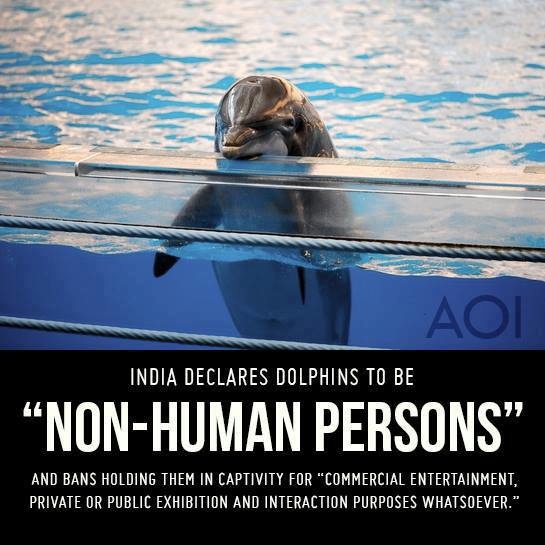
If, as it appears, some form of intelligence, fused with high technology, lies at the heart of the UFO puzzle, why must all forms of intelligence mirror our own? Ants always come to mind when De Void hears the question: “If UFOs are real, why don’t they land on the White House lawn?” If leaderless superorganisms are part of the mix, a take-me-to-your-leader scenario simply doesn't compute. And the inter-species communication conundrum got even more puzzling recently after spending a little time with a provocative New Yorker magazine article, “The Intelligent Plant.” This one makes our as-yet-unsuccessful two-way conversations with dolphins look like a walk in the park.

Botanists are bitterly divided over the term “plant neurobiology,” which at least one source describes as “sophisticated behaviors observed in plants [that] cannot at present be completely explained by familiar genetic and biochemical mechanisms.” In that vacuum, one might confer intelligence onto the mystery. But given how plants show no evidence of neurons, brains or central nervous systems, the bias against the concept of intelligent flora is ostensibly well founded.

However, a small but growing community of botanists is making the case for plant intelligence resembling swarm behavior in (gulp) ant colonies. Employing electrical and chemical signaling, equipped with between 15 and 20 senses, exhibiting stress behaviors and inviting suggestions of echolocation without a central command center, plants — sedentary and nonambulatory though they are — may also be alerting researchers to the limitations of “cerebrocentric” intelligence. In fact, the data is already inspiring theoretical computer modeling based on “the distributed computing performed by thousands of roots processing a vast number of environmental variables.” One of these project collaborators is Italian plant physiologist Stefano Mancuso, who has worked with the European Space Agency on plant behavior in extreme environments and managed to get some experiments aboard a space shuttle mission in 2011.

Mancuso told the New Yorker that a fuller comprehension of plants “would be like being in contact with an alien culture. But we could have all the advantages of that contact without any of the problems — because it doesn’t want to destroy us.”

Maybe not. But forget domination and conquest; a simpler question is, how does one even begin to interpret torrents of information from a superorganism whose interactions with its environment in no way reflects our own? Plants may work off a completely different time dimension from ours, they may appear static, but as this time-lapse video indicates, they are plenty capable of active, intentional behaviors. Plants may be glacially slow, but as writer Michael Pollan points out, they dominate our planet with 99 percent of Earth’s biomass. There’s a reason for that - and perhaps, as well, a cautionary note about attempting to extrapolate the motives of UFOs from our own limited experiences.

Thursday, August 29, 2013


Staring at a Blank Piece of Paper
  I haven’t written anything in a while. This makes me nervous. I get an uneasy feeling like I am neglecting something. It’s a feeling that I should be doing something important instead of goofing off all day. But there is no one standing over me with a whip. No one telling me I have to do it. I don’t punch a clock or answer to a boss anymore. It’s not like I will or won’t get paid if I don’t write something. So far my writing hasn't brought me fame or fortune. So why do I bother? And why won’t this nagging feeling go away? Somehow, I do feel like I’m letting someone down. I know some of you guys take the time to read what I post on my blogs. And even a few of you have actually taken the time to read my books. I’m grateful for that. And I guess part of it is that I feel like I’m letting you down when I don’t write something. But it’s more than that. A big part of it is that I feel like I’m letting myself down. I feel like writing is my gift or God given talent that I’m squandering by not doing more with it. I guess that’s the worse part, and the bit that nags at me.
  My brother is an artist. He is in fact a very talented artist. But he spends more of his time painting signs rather than putting something brilliant on a piece of canvas. Of course I realize that he has to pay the bills and that his art, like my writing, hasn't done that for him. But there were times when I thought to myself that he was squandering such a tremendous gift and talent and, in fact, I have been guilty of telling others that my brother was wasting his talent. Part of that I guess is that I am envious of his gift. If it was something he inherited, those genes certainly skipped over me to get to him. I can’t draw a stick man that even looks like a decent stick man. But I can’t point fingers at him without realizing that I've been given a gift as well and haven’t done a whole heck of a lot with it either. There are all kinds of excuses I could make for this. But they would just be hollow excuses. All those years I let my gift sit on the shelf, as it were, and gather dust. Now it’s almost too late to do anything with it. After all, the human brain runs on borrowed time. My brain is not as nimble and flexible as it once was. And it gets worse all the time. Invention, writing, painting, music, sculpting, intuitive leaps in science are mostly a young man’s game (and by man I mean it in the general sense including both men and women in the term).
   So if it is too late for me, why do I still have this nagging feeling in the back of my mind? Is there something important there wanting to get out? Is there something that at least one of you really needs to see in writing to reaffirm or justify you in some way? Perhaps. Am I being grandiose by even thinking such things? Does God work wonders through me? Am I just an instrument whose strings are waiting for the right moment and player to be plucked in just such a way as to render music such as has never been heard before? I don’t know the answer to that. Where does imagination come from? Where does inspiration come from? I don’t’ know the answers to those either.  But I do know that you can paint just as brilliant a picture with words as you can with brushes and pigments. If you look at the two book covers above, you will see paintings that were lifted from the pages of my book and splashed upon a canvas. I thought my brother did a marvelous job of capturing my words and giving them color.
  But alas, he and I are getting on in years. And if you asked either of us why we didn't do more with our gifts, I’m sure you would get the same answer from us both. Life happened. We were busy with the details and didn't take the time out to see the bigger picture. Is it too late to change that? I hope not. I finally have the time and not a lot of life going on that requires so much of me.

  Now we come to my point. Yeah, you knew there had to be one, right? What gifts have you been given? And what have you done with them? Is your gift laying fallow waiting for some far off spring before it can sprout and come to fruition? Have you put it on a shelf promising yourself that you will make time for it “someday”?  And don’t tell me you weren't given a gift. We all have something that we’re good at. Something that we do just a little better than everything else we put our hands to. There is always something that gives us joy when we do take the time to indulge in it. Can you sing? Can you play music? Can you dance? Can you show compassion for others? Can you heal them when they are sick? Can you create characters on a stage that mirror us all and teach us lessons? Can you fight…yes there is a time for everything in its season. Can you lead or encourage and teach others how to use their gifts? What is your gift? Think about it. And then think about what you've done with it lately? One thing I've learned, unfortunately much too late, is that when we spend time using and developing our gifts it is the time we feel more alive than any other time in our life. If you've done like me, dust off your gift and use it. Don’t wait until it is too late. Don’t let the details of a busy life keep you from it. Find a way to work it in. Trust me, your life will be happier and much more fulfilled if you do. And you won’t be plagued by a nagging feeling that you should have done so much more with what you've been given. 

Tuesday, August 20, 2013


It’s In the Game: Part II
  They say it takes all kinds of people to make the world go around. I guess that’s true. The world is filled with all sorts of people that we have to deal with every day. Everywhere I’ve ever been, I have always managed to meet really good people. I was in Massachusetts for a year when I was in the army and met a wonderful family that invited me and a couple of my friends over for Thanksgiving Dinner since they had heard that we couldn’t make it home for the holiday. Afterwards we spent many weekends with them. They provided us with a car and showed us the sights. When I hear people say that, “All those damn Yankees up north are unfriendly,” I have to disagree. When I was stationed in the country of Panama for two years, my next door neighbors, Martin and Olga, became like substitute parents for my wife and I. They took us under their wing and protected us. We were shown around the country and met many of their friends and went to parties with them. And it has been like that everywhere I’ve ever been. There are many wonderful people in the world of all nationalities, religions, races and backgrounds.
  Of course, we have all run into the other kind. Everywhere I’ve been and in every job I have ever had there is always at least one that I can’t get along with, don’t like because of how they behave or that just rub me the wrong way from the get go. All of us know how to get along with the good ones. But what about the other kind? Let me tell you a little story about a person I had to deal with when I lived in Nashville, TN. From day one on my job there at Nortel Networks, this woman - one of my co-workers -didn’t like me. I don’t know why. I never did anything to her or said anything to her that was out of line. But for seven years she continually bad-mouthed me to our co-workers and the boss and back stabbed me every chance she got. My buddy would be outside in the smoke pen with her and come back and tell me, “Man you should hear what she’s saying about you now. You would really be mad if I told you.” I always told him not to tell me because it didn’t matter. And I told him that all I could do anyway about her was to pray for her. And I did. He couldn’t understand how I could say that or why I didn’t get upset at least. Other people’s opinions of me have never mattered much to me. But anyway, in all the seven years we worked in the same building I never said an unkind word to her or about her. Every day when I saw her I smiled and greeted her just like everyone else. Because of this woman, I didn’t get a raise for years because she convinced the boss I wasn’t a “team player”. I even let that go. Finally I moved on to our corporate office and left her behind. After another five years passed, I decided to move back to Texas. Before I left, I went back to the warehouse and said my goodbyes to everyone. This woman who had hated me all this time was the first to come and hug my neck telling me how much they were going to miss me. And she asked if she could talk to me privately before I left. When we were alone, she handed me a letter that she had intended to mail to me. She broke down and cried and told me how sorry she was for the way she had treated me all those years. She admitted that I had never done anything to wrong her. She said she couldn’t explain why she had been that way, but that she was now getting help for her many problems dealing with people. Prayer answered?
  So in life we all face, sometimes on a daily basis, selfish people, pushy people, angry people, mean spirited people, people who just think they are better than everyone else, and lots of other negative type human beings. It’s an inescapable fact of life. In part one of this article I told you about my new pastime of playing Battle Pirates. Since we can “chat” with one another in the game, you also meet all kinds of people there too. The biggest majority are awesome, generous, helpful and friendly people. I’ve been told that you can’t really get to know people on the internet. I beg to differ. Personalities come out there just as they do in “real life”. For instance, I know that Heidi Mouse is a very wonderful caring mother who adores her young daughter. I know that rjsmauraders is a good friend to have and will be excellent in his newly chosen health care profession as soon as he graduates. I know that KaBcruiser is a funny, vivacious cut-up on the surface but her waters run deep, and she has secrets she keeps from all of us. I know that n2xdr runs a “Daddy Daycare” and loves his and all children very much, and that he is a tireless and fearsome warrior of God. SheDevil I know personally. In the game she is a shameless flirt and mischief maker, but in real life she has a heart of gold. And then there’s Couyons. Couy is the leader of our little alliance. He’s all over the charts sometimes but always funny. And what Cajun do you know that doesn’t like to party and eat good food?And then there are guys like DeathbyTug, Kiwi, and Griff who have reached across the water with concern for an old guy like me who they don’t even know and will probably never meet to make sure that I’m ok.
  Those are just some of the good guys. But in the game, just like in real life, you have to deal with the other kind as well. Their mean spirit and animosity towards the rest of us comes out in everything they do and say. So how do you deal with them? When you cross over and yell at them and curse them, all you manage to do is be like them. And it reinforces the negative things they already think about you in the first place. You cannot defeat a negative with a negative. You only make it stronger. So when you come up against a beast of a human being in “real life” or in the game, the best ways to handle it is pray for them and walk away. When negativity is ignored it will eventually shrivel and die. Give it an audience, and it will only grow.

  So when I say, It’s In the Game, I mean that there is life in this game at least. It’s not all mindless posing. You make friends and maybe even enemies just like in real life, and you have to learn how to deal with that. You learn who you can count on and who you can’t. I’ve seen it happening over the past few years, and I’m sure it will continue to happen faster and faster where the real world and the virtual world start to converge. Someday, in the not too distant future, it may get harder and harder to distinguish between the two. Can you imagine playing battle pirates on something like the holo-deck of the Enterprise? I can see that day already rapidly approaching us. Let’s just hope we are all emotionally ready to deal with the folks we meet there whether they be computer generated ones like the evil drac or real ones who have entered the game with us. Interacting with all kinds of people is obviously one of the reasons why we’re here. After all, we could have been all the same like some herd animals or bees in a hive. But then we wouldn’t be human would we? And our chance for getting to know ourselves and others would be lost.


Saturday, August 17, 2013

It’s In The Game: Part One
  You know when I got my first computer, back in the stone age of such things, I became very addicted to online chatting. My brother and I created a chat room of our own on mirc called “The Oasis Bar”. For a year that was our favorite virtual hangout. He and I had complete control over who was welcome in the bar and who was not, which was a function of mirc that made their chat rooms so much more desirable than those on AOL. Those were the days of dial up modems and slow download speeds, but the chat room worked pretty well most of the time. Tinman (me) and Muddog (my brother) could talk to people all over the world. We thought it was awesome. We had regular “customers” at the Oasis Bar who showed up every night. Muddog and I kept them entertained with our zany antics and it was fun. He would say something just a little bit bad and I would say, “Tinman rolls up a newspaper and hits Muddog on the nose with it – bad Muddog!” And he would come back with “Muddog gets a shotgun and shoots Tinman and uses him for a cheese grater.” It was fun and way more entertaining than anything on TV. And I got to know my brother a whole lot better even though at the time we lived eight hundred miles apart. When I was at work, all I could think about was getting home and slipping back into that virtual world. I was that addicted. For all that year, my wife was working evenings while I was working days. So being at the Oasis Bar probably kept me home and out of real ones and kept me out of trouble.
  After a year, things changed in my life and the computer world began to change more quickly than I could keep up with financially. The Oasis Bar closed down never to reopen again. Several years later, armed with a brand new computer and high speed cable internet, I got back on mirc to see what it would be like. It had changed. People weren’t just “chatting” anymore by typing what they had to say and waiting for a response. Most of them had gone to voice communications. And there was all this omg, bbl, wth, ggp, rofl, lmao, stuff going on with the ones who did still stoop to non-verbal communication (and I use the term lightly here – for nothing was being communicated to me). It was like I stumbled into a foreign language room, and I was the only one who didn’t speak the language. So I uninstalled the mirc software I had just downloaded and never went back again. The magic was gone.
  Three or four years ago I heard about something called “My Space” at work. I was encouraged by a friend to check it out. I did. I created my own myspace page. It allowed some communication with people I knew but was nothing like the old mirc chat rooms. I had e-mail of course, but it seemed like the novelty had worn off there too, and people quit using it. I may still have a My Space page out there…I don’t know. Facebook came along and blew My Space out of the water. Two years ago, I started my modest little facebook page with my one or two friends posting pictures and daily inconsequential stuff. Then all my relatives started getting on facebook too and were sending me friend requests. How cool was that? Now I have over two hundred friends on my friend list. I never had that many friends in real life. Hell, who am I kidding? I never had more friends than I could count on one hand with some fingers left over. So Facebook was an awesome way to keep in touch with friends and relatives on a daily basis, and I even got to know some relatives that I had never met face to face before.
  Through one of those relatives, I was invited to play a little game on Facebook called Farmville. I did for a while but it was one of those never ending games that only serves to kill a little time when you’re so bored you would go sit outside and watch the grass grow for entertainment. Then I retired. That changed a great deal of how I spent my time. Facebook became my link to the real world as I was feeling no longer connected to it in a real way otherwise. During the next two years I wrote three books to fill up the long isolated days and nights. It was something that had been bottled up in me for so many years and, when I uncorked that bottle, it just came gushing out. But with more changes in my life, that most of you are aware of and we won’t go into here, time became a vast wasteland that needed something mindless to fill it to keep the boogey man away.
  On a bored out of my mind day, one of those little thingies on the side of the Facebook page caught my eye inviting me to play a game called “Battle Pirates”. Hey there was an Errol Flynn time in my younger days when I dreamed about being a pirate plundering the high seas and saving damsels in distress. If I couldn’t be a real Indian, then I wanted to be a pirate. So I tried Battle Pirates and I’ve been addicted once again like I was to mirc in the olden days. In Battle Pirates you have your own island base that you have to defend and can build fleets of ships to go out and do battle with the evil drac empire or with your neighbors. You can also form alliances with neighbors and friends to pillage and plunder together while protecting each other from the bad guys. And more importantly, there’s a little chat window down in the bottom left hand corner of the screen enabling you to “talk” to everyone who is in the same sector as you. My pirate name is Crabbe. I googled historical pirate names and found an interesting one named John Crabbe. Now everyone mostly calls me Crab or Crabbie on there, and tells me to pinch my opponents with my claws or keep my eyestalk peeled for intruders.
  Like Farmville, Battle Pirates is one of those never ending games but, because of the interaction and ability to chat with other players at the same time as battling for your pirate life, the game is very addictive. The alliance I’m in is called SWAC (Salt Water Crocs), and is made up of people from all over the US, Great Britain, and even one guy from New Zealand.  Most of them are just as addicted to the game as I am. We all spend hours every day battling our mutual enemies, discussing improvements to our island defenses, building bigger and better fleets of ships and just chatting about our part of the real world. For me, it gives me a sense of not being alone in the world. I spend seven days a week basically alone and isolated. But this silly little game keeps me sane and in touch with what’s going on “out there”. It would be nice to have friends I see on a regular basis. But I don’t. So for now, my virtual friends will have to do. And some of them, by now, probably know more about me than some of my real friends and family do.

  So now I have something that keeps me grounded and, at the same time, keeps me from sinking into a very lonely abyss of sadness and despair. I shudder to think how these days would have gone for me back before we had the internet. Sometimes, late at night, talking to my pirate friends KaBcruiser, or her mate ssssspaz, or aCe, or rjsmarauders, or Twisted_Pyro, or n2xdr helps me make it through a very tough time. So if you ever find yourself lonely and bored, jump on board matey – adventure awaits you. There are lots of scallywags out there that need to be taught a lesson. So all hands on deck, grab your swords, and join the battle alongside the good Captain Crabbe.  You never know whose life you might help save and what interesting people you might meet that you never would have otherwise. Arrrrrrrrrg!


Tuesday, August 13, 2013


Watching Leaves Fall
Part II of The Secret Life of Trees
  This morning, like every morning, I sat outside and drank my coffee on my front deck. It is very mild and humidity free for a mid-August, Southeast Texas day. I noticed that several leaves on the sweet gum trees and oaks have already begun to turn yellow. Signs of an early fall perhaps? There was not a breeze of any sort. No leaf rustled or moved. The birds were even unusually quiet. Calm. And just as I looked one of the yellow leaves turned loose and began a slow motion, fluttering dance to the ground. This dance was repeated several times as I finished my cup of coffee. I am surrounded by beautiful sweet gum, oak, very tall majestic pines, and even one large magnolia tree. Green. Green in every direction I look. With the falling of that first leaf, however, I am reminded that all of it will soon change. The leaves will fall, the grass will turn brown, and the flowers will fade. The color will be washed away like paint on a canvas left out in the rain. With that first leaf that fluttered to the ground, sadness overtook me. But somehow mixed with that sadness is a sense of joy as well. I like the cooler weather of fall and winter. And even as that first leaf hit the ground there is a promise of rebirth. I take it for granted that spring will follow winter. Renewal is guaranteed. I don’t question it. I know that spring will come. It is not a question of faith or belief. I know it.
  In our lives we too are like the trees. We have our spring, summer, fall, and winter. In such a cycle, I am very aware that I have reached the fall of my life. In a way that realization brings me the same twinge of sadness that I felt watching that first leaf fall. I know winter is coming. For me to think that there is no promise of some sort of spring to follow winter would plunge me into the deepest melancholy that I would never be able to find my way out of again. But just like I know there will be a spring in nature, I know that there is a spring awaiting me as well. For me, it is not a matter of faith or belief. I know it with a deep down understanding that I can never explain to or convince anyone of. How do I know it? How can I be sure that my knowledge is not just wishful thinking? That I don’t know. But somehow, when I examine it closely, I just know that the end of this life is not the end of me. That knowledge gives me comfort and the will to push on.
  To each of us individually, all the people we know, care about, and love are like so many leafs on the branches of our lives. One by one they fade and fall away from us. It is very hard to escape the sadness of their falling away. Does the tree mourn each leaf that falls? Probably. But in its quiet winter repose, deep down it knows that new leaves will grow and take their place. Someday the tree itself will fall away, making room for new trees to grow and prosper. Such is the way of life. Will its fellow trees miss it and mourn its passing? I for one think they do. But why must it be so? Many have asked me that question. Why does entropy exist in all things? Why did simple life become more and more complex? And why does complexity ultimately decay and fall back into simplicity again. Why do things seem to evolve or adapt? Why do things change? Simple life forms with only single cells existed for millions and millions of years and were doing just fine apparently. What was the impetus that pushed them towards complexity? Why couldn't single cell life forms have been the be all and end all of existence? Why couldn't each cell have been so perfect that it was immortal? Questions like these lead me to believe that there is much more going on than life just being life.

  When you get down to it, we and the trees according to the biologists are just a collection of chemicals and chemical reactions. To the physicists we are just a collection of atoms. To the quantum physicists we are not even that. Instead we are sub-atomic packets of potential energy that only exists in this reality when an observer is observing them. Are chemicals alive? Are atoms? A piece of metal is made up of some of the same atoms that we are supposedly made up of. Is it alive? Life then is apparently something other than and greater than the sum of our parts. The individual parts (atoms or chemicals or packets of energy) are not by definition alive. And no matter how many of them you stack on top of one another can they be said to be alive. But yet we and the trees live. I am confident that the essence that breathes life into lifeless things is what really matters and is perfect and eternal. Call that essence what you like. But it is the knowledge of that essence that gives me hope and keeps me putting one foot before the other. I cannot express these sentiments so well as Emerson, Longfellow, Tennyson, and Frost – my favorite poets. But they studied nature and very much tried to express these same understandings with all the eloquence of language they could muster. By studying nature they somehow came to the same conclusion – that there is so much more to life than just living and dying. So much more as Tennyson put it than nature simply being “red in tooth and claw”.


Monday, August 5, 2013


The Secret Life of Trees
  I've been saying it for years and, if you read my books, you already know what I think about the plant kingdom. The other day I watched an episode of “Through the Wormhole” with Morgan Freeman on the Science Channel that broached the subject of plant intelligence and communication. So science is finally catching up to what I've known for a very long time. I also read an article by a strict vegetarian today that was putting forth the argument that it was somehow immoral to take the life of another animal for food. So I decided I would examine the question here for those of you who might be swayed by such fuzzy logic. Is it immoral to take the life of another creature so that we may live? I personally don’t see how we could avoid it. At least as we exist today. I will get into more on that later.
  First of all plants or the vegetable kingdom predates the animal kingdom by many millions of years. The plant kingdom had to be here for a very long time to produce enough oxygen in what would have been a very poisonous atmosphere for us. Until the oxygen level was high enough, animal life as we know it wasn't possible. And just what is oxygen anyway? Technically, it is a waste product produced by plants during photosynthesis. So what plants exhale as a waste product, we inhale as a life giving substance. So basically we are parasites of plant waste. Not a pleasant thought I know. But let’s look at it a little deeper. Most all plants harvest sunlight directly for food and energy. Without sunlight, they die. It wasn't until enough plants existed on Earth to create an oxygen rich atmosphere that animals were able to emerge - first in the oceans, and then on dry land. Animals could not harvest sunlight directly for food as the plants did. Animals were totally dependent on plants, harvesting them instead, stealing the nutrients and minerals plants created from sunlight. In other words, animals were parasites which probably developed as a way for nature to keep the plant kingdom in check. So the first wave of animals was plant eaters. But they in turn grew numerous and threatened to overwhelm the plant kingdom. So a new sort of animal came about. One who was too lazy to harvest plants for themselves and fed upon plant eaters instead stealing the life giving nutrients and minerals from the thieves who had stolen them from the plants. This kept the plant eaters in check. Humans at first fell into this category. We were meat eaters. We survived by killing and eating plant eaters and even sometimes our fellow meat eaters. We may have been nature’s answer to the meat eaters to keep them from overwhelming the plant eaters.  Sure we were eventually able to sometimes supplement our diet with fruits and nuts we found along the way. But it was meat that kept us alive. It was a very long time before our human ancestors learned to become at least partial plant harvesters themselves.
  We are fond of the idea that in all of evolution, humans are the only creatures that have developed intelligence, feelings, and self-awareness. But is that really true? I and many others, including a growing number of scientists, think not. It has been demonstrated scientifically now that plants do communicate, are self-aware, and conscious of their surroundings. They communicate both through chemicals and pheromones and with sounds that are out of the human range of hearing. Furthermore there is growing evidence that they cooperate with their neighbors at times sending them life giving energy when they are in need. It has been shown that when a caterpillar starts eating a leaf on a plant, the plant is able to send out a pheromone that attracts wasps. A wasp comes in response and stings and eats the caterpillar. So who is using who here? When you really think deeply on the subject, you can see a wide web of symbiotic arrangements going on between the plant and the animal kingdoms. And perhaps even an age old struggle between the forest plants and grasses for space upon the surface of the world – each with its various armies of allies in the animal kingdom.  
  So with all this and much more evidence in mind that plants are living, problem solving, self-aware beings, the question arises – Is it moral to take their lives and eat them in preference to taking the life and eating our fellow members of the animal kingdom? My own observation is that something must give up its life or life potential for us to survive. We cannot harvest sunlight directly or live very long by eating dirt. That is just a fact of where we are in the food chain. Morality has nothing to do with it. So if you choose to only eat plants and their seeds (ignoring the fact that in the process you are probably eating countless billions of microbes who are technically members of the animal kingdom) you are still taking lives. As I said, something has to give up its life for you to be here. In nature’s grand scheme of things, it makes very little difference which kingdom you feed upon. All nature is concerned with is maintaining the balance.
  Now if you choose to eat plants over animals because you think it is healthier – then in today’s world I might agree with you there. With the growth hormones and antibiotics we inject into our meat supply that is then transmitted to you by eating it, you could make a very strong case against eating meat. But with the increasing use of pesticides and genetic modifications of our plants and vegetables that we consume, the risks to your health are beginning to even out.
  Now I don’t know how many of you ever watched the sci-fi series called “Farscape” on TV. But if you did, you know there was a character on there that was neither strictly animal or plant but a combination of both. She was able to feed directly on sunlight. And in fact she suffered when she was unable to do so. I would put forward that to escape the niche we’re in of feeding on other living organisms, it would be a very worthy goal for our genetic engineers in the future to modify the human genome in such a way as to enable us to also do as the plants do and harvest the life giving starlight directly through our skin. Would we still be human in such a case? Who knows? But I suspect in the future, if we survive the next few years, such choices will come up and need to be considered long and hard.

  So, in conclusion, making the choice to become a vegetarian for moral reasons is pretty ludicrous at best. And the health benefits are dwindling as we speak. So eat up my friends. Right now you don’t have much choice. Just be aware of the fact that life sacrifices for life. And give thanks that such sacrifices are made on a daily basis to enable you to be here at least for a little while longer. Give thanks and try not to dwell on it too much the next time you’re taking that big bite of yogurt, or pork chop, or spinach.